








A Stable, Natural-Looking Ear Prosthesis
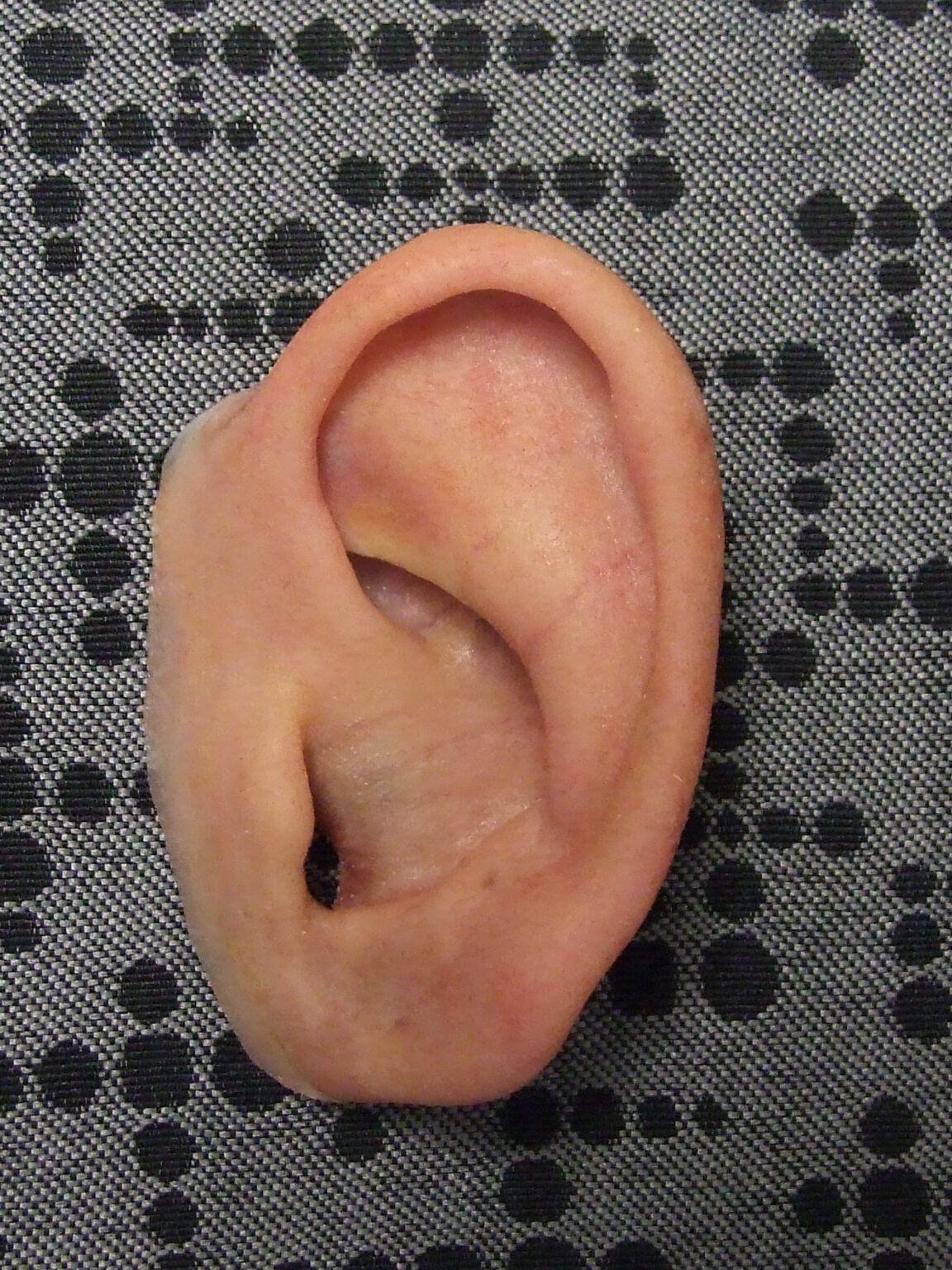
An ear prosthesis (auricular prosthesis) is a custom-made silicone ear created by an anaplastologist to restore natural appearance after ear loss.
Patients seeking an ear prosthesis or surgeons looking to refer for an implant-retained auricular prosthesis often ask about stability, appearance, and long-term outcomes.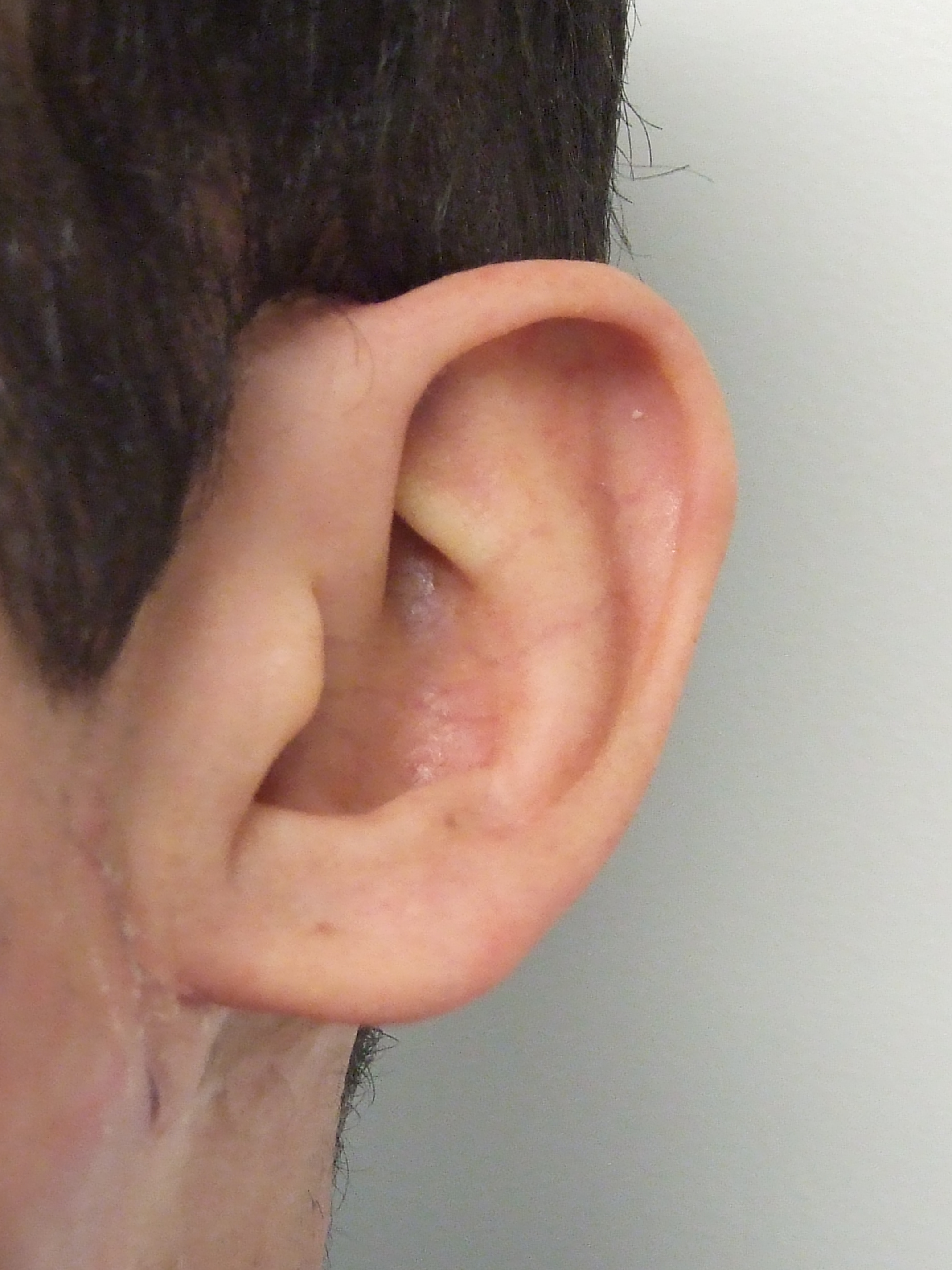
This case from 2015 remains a strong example of how an implant-retained ear prosthesis can achieve both exceptional stability and natural appearance when planned and delivered by an experienced anaplastologist in collaboration with a surgical team. It further validates the anaplastology-centered treatment model that is utilized by many surgeons because of the improved aesthetic results and long term patient satisfaction.
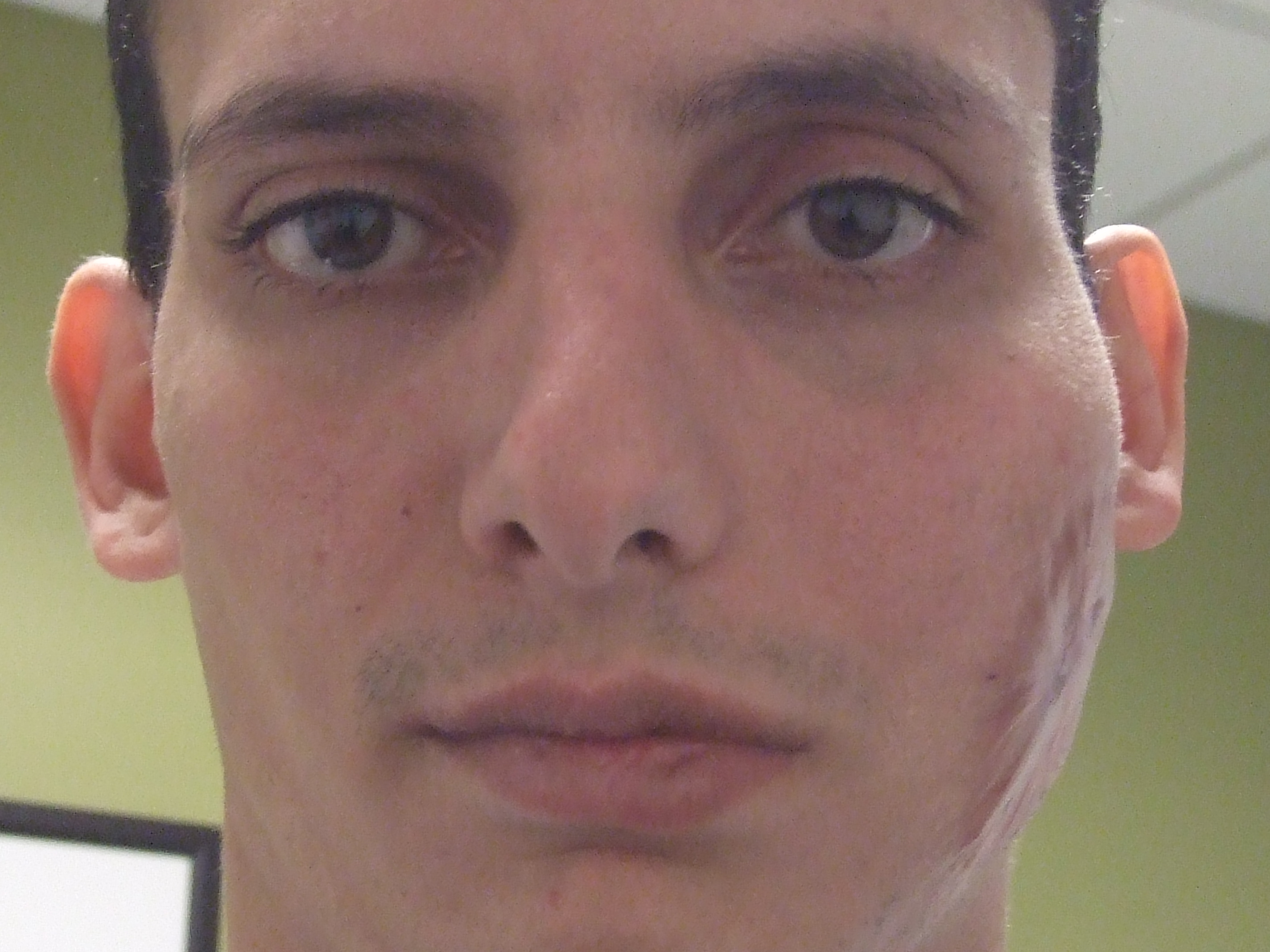
Translucence of prosthetic ear matched to that of his natural ear
A patient from Argentina was treated through a coordinated effort between plastic surgeon Robert Morin, MD (New York/New Jersey), certified clinical anaplastologist Greg Gion, medical artist Shay Kilby, MS, and a Cochlear Vistafix implant representative. Although the team members had not previously worked together, the outcome demonstrated what is possible with a well-executed, multidisciplinary craniofacial prosthetics approach.
The silicone auricular prosthesis was securely retained using osseointegrated implants. It resists accidental displacement during normal daily activity, yet can be easily removed by the patient using a simple, learned motion. Just as importantly, the prosthetic ear exhibits lifelike translucency that closely matches the natural ear under varying lighting conditions.
By clinical standards in craniofacial prosthetics, this case represents a highly successful long-term outcome.
Expanding Access to Experienced Anaplastologists
This case also reflects an ongoing effort to improve access to qualified anaplastologists in regions where these services are limited.
The collaboration began when Greg Gion identified Shay Kilby, a medical artist with foundational training in anaplastology from the University of Illinois at Chicago. Based on shared training and clinical standards, she was selected for advanced, case-based mentorship. Training occurred through hands-on patient care in New York and New Jersey, combined with structured remote instruction.
This model of experienced anaplastologists training medical artists to become independent clinical providers has been successfully implemented multiple times since 2005. It allows for the responsible expansion of high-quality prosthetic ear services without compromising outcomes.
Following this mentorship, Shay Kilby continued to refine her skills in multiple clinical settings before establishing her own anaplastology practice. Her presence in key regions has also supported continued patient access and the training of additional clinicians.
Long-Term Outcomes in Auricular Prosthetics
The patient continues to receive replacement prosthetic ears over time, as expected with silicone prostheses. With proper design, implant placement, and ongoing care, implant-retained ear prostheses can provide durable, predictable, and highly aesthetic results for patients who have lost an ear due to cancer, trauma, or congenital conditions.
Finding an Ear Prosthesis Specialist Near You
Patients searching for an “ear prosthesis near me” are often looking for an experienced anaplastologist who can provide custom auricular prosthetics. Medical Art Prosthetics works with patients nationwide, with treatment locations in multiple cities and coordinated care for out-of-town patients. Many patients travel for ear prosthesis treatment due to the specialized nature of anaplastology and the importance of achieving natural, long-lasting results.
Ear Prosthesis Frequently Asked Questions (FAQs)
1. What is an implant-retained ear prosthesis?
An implant-retained ear prosthesis is a custom silicone auricular prosthesis secured with small osseointegrated implants. It provides a stable, removable, and highly realistic alternative to surgical ear reconstruction.
2. Who is a candidate for an ear prosthesis?
Patients missing an ear due to cancer, trauma, or congenital conditions such as microtia are often good candidates. A consultation with an experienced anaplastologist and surgeon helps determine the best option.
3. How secure is an implant-retained ear prosthesis?
Implant-retained prosthetic ears are very stable and resist accidental displacement during daily activities, yet can be easily removed by the patient when needed.
4. What does an auricular prosthesis look like?
A well-made ear prosthesis closely matches the color, shape, and translucency of the natural ear, making it difficult to detect in normal social interactions.
5. How long does an ear prosthesis last?
Most silicone ear prostheses last 1.5 to 3 years depending on care, skin chemistry, and environmental exposure. Replacement prostheses are part of normal long-term care.
6. How do surgeons refer a patient for an ear prosthesis?
Surgeons can refer patients directly to an anaplastologist for evaluation and coordination of care, including implant planning if needed.
7. Is an ear prosthesis better than surgical reconstruction?
It depends on the patient. An ear prosthesis offers predictable aesthetic results without multiple surgeries, while reconstruction may be preferred in some cases. Many patients choose prosthetics to avoid additional procedures.
Related News Articles
Prosthetic Eyes to Myoelectric Hands

Anaplastologists Unite at International Meeting