








Modern Prosthetic Eye Restoration: Introducing Sneh Mandal, BDS, MS
Combining Clinical Expertise, Technology, and Artistry to Restore the Appearance of a Natural Eye
Losing an eye through trauma, disease, or cancer is a life-changing experience. Beyond the loss of vision, patients must also adjust to changes in facial appearance, eyelid position, and the surrounding tissues. Fortunately, advances in ocular surgery and custom prosthetic eye fabrication have made it possible for many patients to achieve remarkably natural-looking results.
At Medical Art Prosthetics, we are pleased to introduce Sneh Mandal, BDS, MS, our newest clinical anaplastologist and ocular prosthetics specialist, who will be providing custom prosthetic eye services in Madison, Wisconsin. Sneh brings an unusual combination of dental training, advanced clinical anaplastology education, and formal fine arts experience to the specialized field of ocular prosthetics.
Understanding Eye Loss and Modern Reconstruction
Surgical removal of an eye is generally performed for several reasons, including severe trauma, painful blind eyes, intraocular tumors, and certain advanced infections or diseases.
Two commonly performed procedures are enucleation and evisceration. Enucleation involves removing the entire eyeball while preserving the surrounding orbital tissues and, when possible, the extraocular muscles. Evisceration removes the internal contents of the eye while retaining the outer scleral shell. The appropriate procedure depends on the patient’s diagnosis and surgical circumstances.
During either procedure, an orbital implant is commonly placed within the eye socket to replace lost volume and provide support for the surrounding tissues. Depending on the surgical technique, the eye muscles may be attached to the implant, helping transfer movement to the eventual prosthesis.
Following surgery, patients typically wear a temporary clear plastic conformer that helps maintain the shape of the healing socket and supports proper eyelid positioning.
Once healing has progressed sufficiently, usually around six to eight weeks after surgery, the patient can begin the process of receiving a custom ocular prosthesis. The exact timing depends on healing and the surgeon’s assessment.
It is important to understand that the orbital implant and the artificial eye are separate components. The implant provides internal volume and support, while the custom prosthesis is the visible, removable component that recreates the appearance of the natural eye.
Patients undergoing enucleation or evisceration should understand the surgical process and the subsequent stages of ocular rehabilitation. The American Academy of Ophthalmology’s guide to eye removal surgery provides an overview of these procedures and what patients can expect.
What Makes a Modern Custom Prosthetic Eye?
A well-made ocular prosthesis involves considerably more than simply matching the color of the patient’s remaining eye.
The ocularist must evaluate the shape and depth of the socket, eyelid contours, available tissue support, and the position of the orbital implant. A properly designed prosthesis must also account for the patient’s natural gaze, eyelid opening, and facial symmetry.
Custom fabrication generally involves several important stages:
- Socket evaluation and impression: The ocularist evaluates the socket and develops an accurate representation of its contours to establish a comfortable, stable fit.
- Prosthesis fabrication: A custom acrylic prosthesis is shaped and refined to accommodate the individual anatomy.
- Iris and scleral painting: The iris, pupil, scleral coloration, and fine vascular details are carefully reproduced to complement the patient’s remaining eye.
- Fitting and refinement: The prosthesis is evaluated for comfort, eyelid support, positioning, and appearance. Adjustments are made as necessary before final delivery.
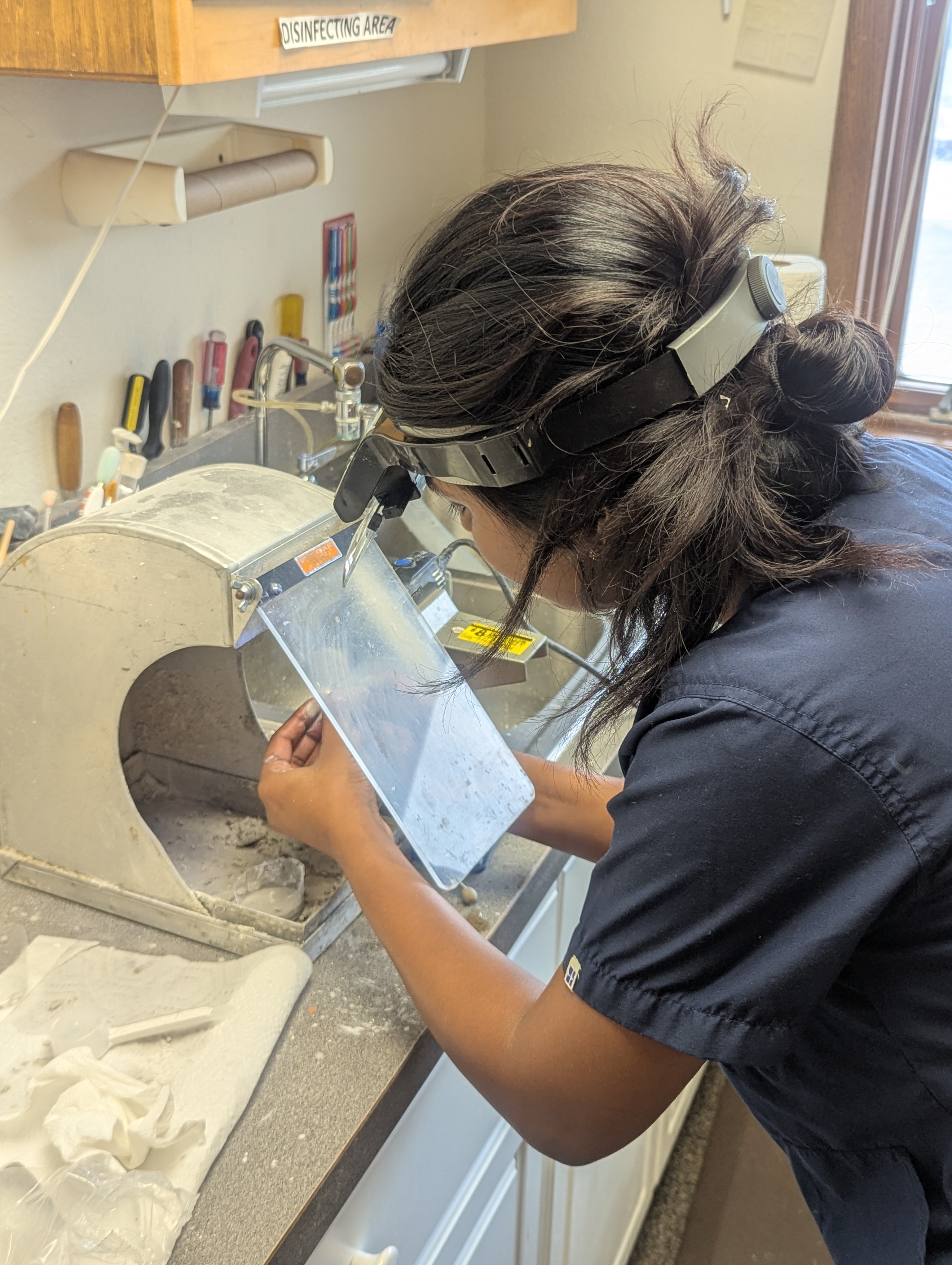
The polishing of a prosthetic eye
The final polishing process is particularly important. A smooth, highly polished acrylic surface helps provide comfortable contact with the surrounding tissues and reduces surface irregularities that can contribute to irritation and discharge.
Although modern materials and fabrication techniques have improved considerably, the artistry involved in creating a convincing prosthetic eye remains essential. Subtle variations in iris coloration, pupil size, scleral translucency, and tiny blood vessels can make a significant difference in the finished appearance.
The Importance of the Ocularist and Surgeon Relationship
For oculoplastic surgeons, the relationship with an experienced ocularist is an important part of comprehensive anophthalmic socket rehabilitation.
Surgical reconstruction establishes the foundation for prosthetic restoration. However, the ultimate appearance and function of the prosthesis depend on several additional considerations, including socket anatomy, implant position, eyelid relationships, prosthesis contours, and the quality of the custom fabrication.
Communication between the surgeon and ocularist can be particularly valuable when patients experience implant exposure, socket contraction, eyelid malposition, inadequate orbital volume, or difficulty retaining an existing prosthesis. The oculoplastic surgeons professional society is The American Society of Ophthalmic Plastic and Reconstructive Surgeons, also known as ASOPRS.
Regular follow-up is equally important. Changes in socket anatomy can occur over time, and an older prosthesis may develop surface irregularities or become less comfortable. Periodic professional evaluation, polishing, and replacement when indicated help maintain both comfort and appearance.
Medical Art Prosthetics welcomes collaborative relationships with ophthalmologists and oculoplastic surgeons who recognize the value of specialized ocular prosthetic services in their patients’ continuing care.
Introducing Sneh Mandal, BDS, MS
Sneh Mandal brings a particularly interesting background to ocular prosthetics. She earned her Bachelor of Dental Surgery from SRM Kattankulathur Dental College and Hospital in Chennai, India, where she subsequently practiced as a general dentist before coming to the United States.
She continued her education at Johns Hopkins University, earning a Master of Science in Clinical Anaplastology. Her graduate training provided experience in the fabrication of custom ocular, facial, and somatic prostheses.
In addition to her clinical education, Sneh has formal fine arts training, an important foundation for the detailed artistic work required in creating lifelike prosthetic eyes.
Her interest in combining clinical science with emerging technologies was demonstrated through her graduate capstone project, in which she developed a concept for a self-lubricating ocular prosthesis. The project received the Best Poster Presentation award at the International Anaplastology Association conference. She also helped organize an ocular painting workshop at the conference, reflecting her interest in both the technical and artistic aspects of the profession.

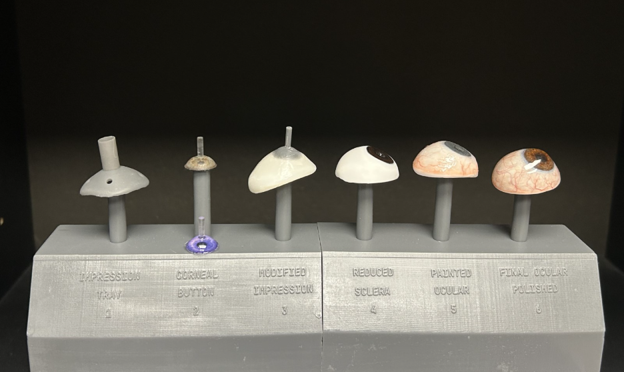
Samples to show patients the steps involved in the making of their prosthetic eye
Sneh’s teaching model, illustrating the sequential steps involved in creating an ocular prosthesis, provides an excellent example of her interest in sharing the knowledge and techniques behind this specialized work.
Her combination of dental education, clinical anaplastology training, and artistic experience brings an additional dimension to Medical Art Prosthetics’ ocular services.
Prosthetic Eye Services in Madison, Wisconsin
Medical Art Prosthetics provides individualized prosthetic restoration for patients who have experienced the loss of an eye. Our approach combines careful anatomical evaluation, custom fabrication, and detailed artistic finishing to produce prostheses designed around each patient’s unique requirements.
With Sneh Mandal now providing ocular prosthetic services in Madison, we welcome inquiries from individuals who have recently undergone enucleation or evisceration, those who need a replacement for an existing prosthetic eye, and patients experiencing problems with comfort, fit, or appearance.
We also welcome referrals and professional consultations from ophthalmologists and oculoplastic surgeons seeking an experienced clinical anaplastologist for their patients.
At Medical Art Prosthetics, we recognize that restoring the appearance of an eye requires more than replacing what has been lost. It requires an understanding of anatomy, clinical experience, and the artistic ability to recreate the subtle details that make each eye unique.
Related News Articles
Prosthetic Eyes to Myoelectric Hands
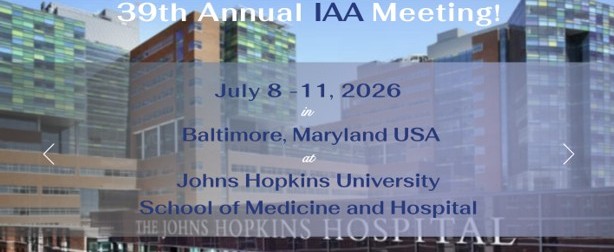
Anaplastologists Unite at International Meeting