







From One Prosthetic Extreme to Another
First, Prosthetic Eyes – All Artistry
Everyone that comes to learn about prosthetic eye making or becomes a patient needing an eye prosthesis comes to understand its an art. A beautifully created eye prosthesis displays a perfect iris stroma color match, a carefully rendered collaret encircling the pupil, a hazy limbal blend and anatomically correct tortuous veining. A highly polished the ocular prosthesis becomes gem-like. Yes, the ocularist draws on classic innate artistic skills to deliver this level of realism. However, slowly but surely imaging technology is starting to lend some really valuable time savers that give us a head-start.
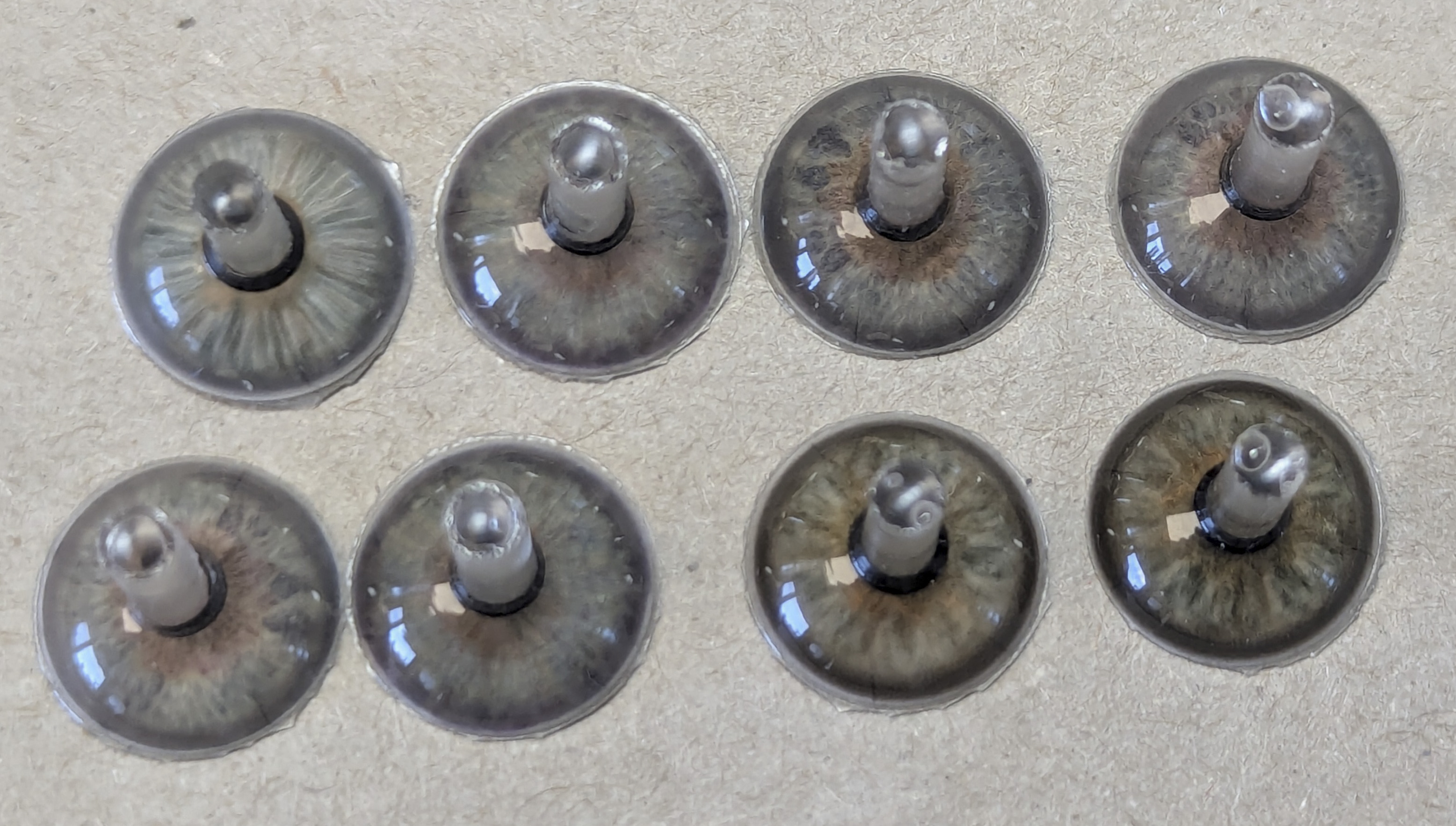
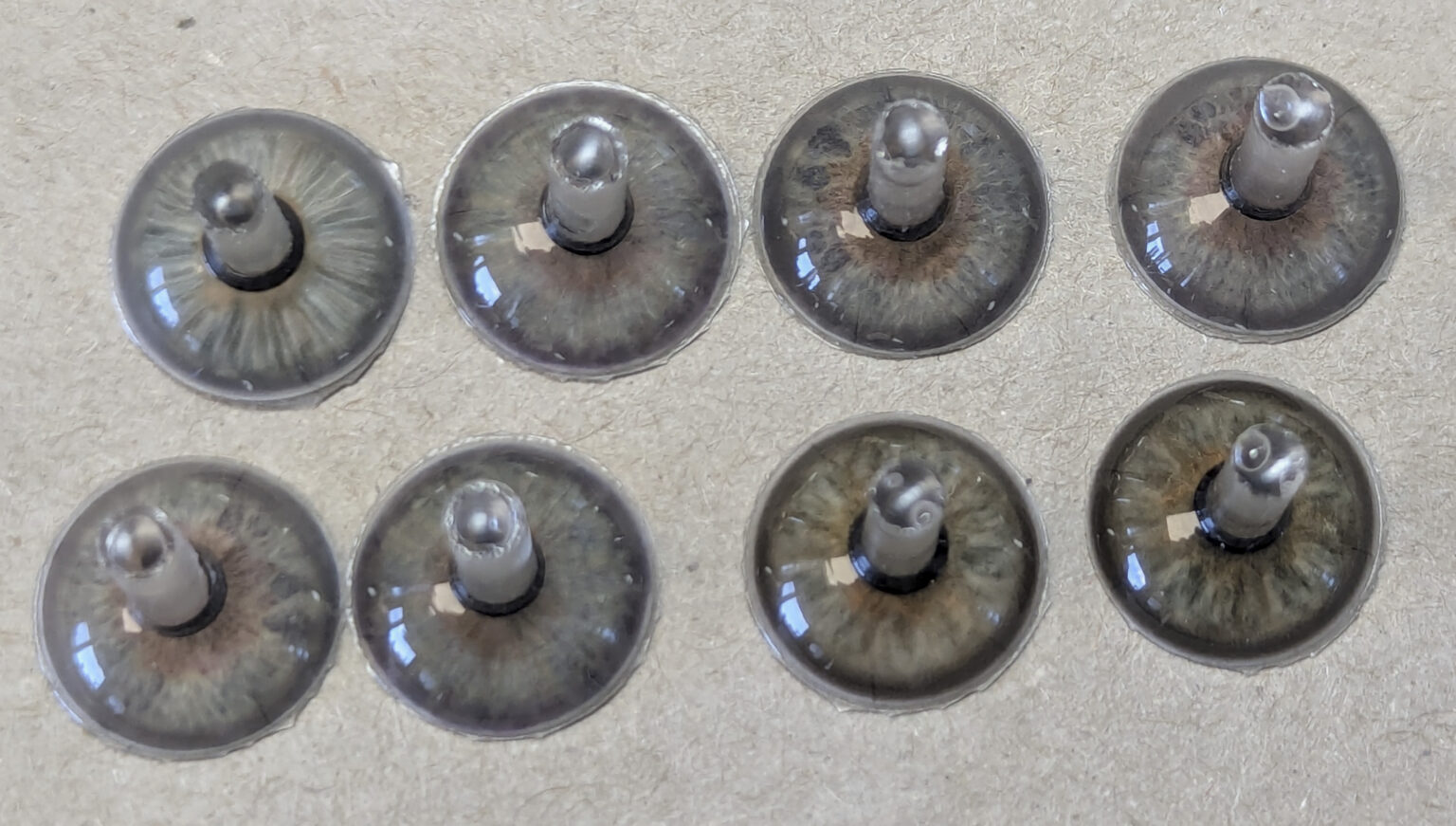
Selection of Digital Iris Buttons
Enter the digital iris button – a premade iris disc encased under a crystal clear bulge (above) that represents the cornea of the human eye. Hundreds of iris buttons are available of every conceivable color from blue to grey, from green to hazel, and from rust brown to almost black. From this huge premade stock an extremely closely matching iris button can be selected as a staring point in the making of the prosthetic eye. From there it is all artistry by the anaplastologist or ocularist.
The Anaplastologist – Artist and Clinician
Enter the anaplastologist to complete the fabrication process. Many of us in anaplastology work routinely within the realm of silicone elastomers – the soft flexible medical rubber that we use to simulate soft tissue and mimic skin appearance that have been lost to cancer, trauma or that are missing from birth. However, in the making of an ocular prosthesis we switch from silicones to working with acrylics. The iris button is acrylic and so is the while plastic that surrounds the iris and simulates the while part of the human eye called the sclera.
The Anaplastologist Fabricates, Cleans, and Polishes Prosthetic Eyes
We recently had the pleasure of a visit from a recent graduate of the Johns Hopkins Hopkins Graduate Program in Clinical Anaplastology. Sneh Mandal was in Madison to demonstrate her ocularistry techniques. The photo (below) shows Sneh polishing the prosthetic eye that she custom fabricated by working our Wisconsin patient. Her beautiful prosthetic eye was then incorporated into the silicone orbital prosthetic restoration created by anaplastologist Julia Schomberg, MSOP.
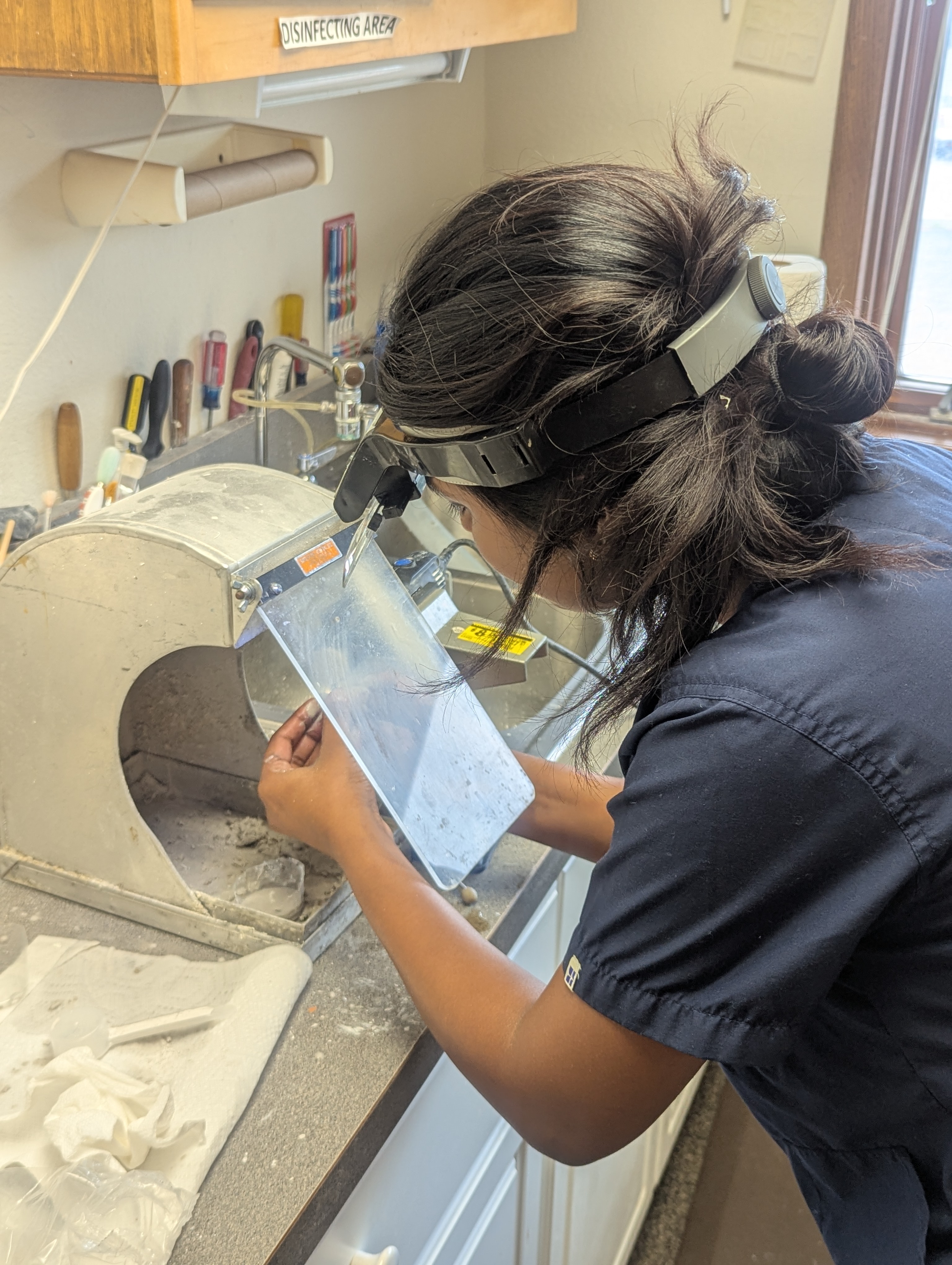
The polishing of the prosthetic eye
It was a week of close collaborative efforts between Sneh and Julia and the patient. At Medical Art Prosthetics we have advocated for expansion of the anaplastologist’s responsibilities, their professional footprint and career trajectory, and their role a valued practitioner in each and every practice setting.
From Prosthetic Eyes to Prosthetic Fingers
There is a real shift of gears going from plastic eye prosthetics that fit passively within a small anatomical cavity to silicone fingers that fit around and over hand anatomy – anatomy that is constantly in motion. Julia, the anaplastologist, has created delicate wax finger models that serve only as prototypes of the prosthetic fingers at the stage in the image (below). She gently positions and holds the wax fingers against the patients hand.
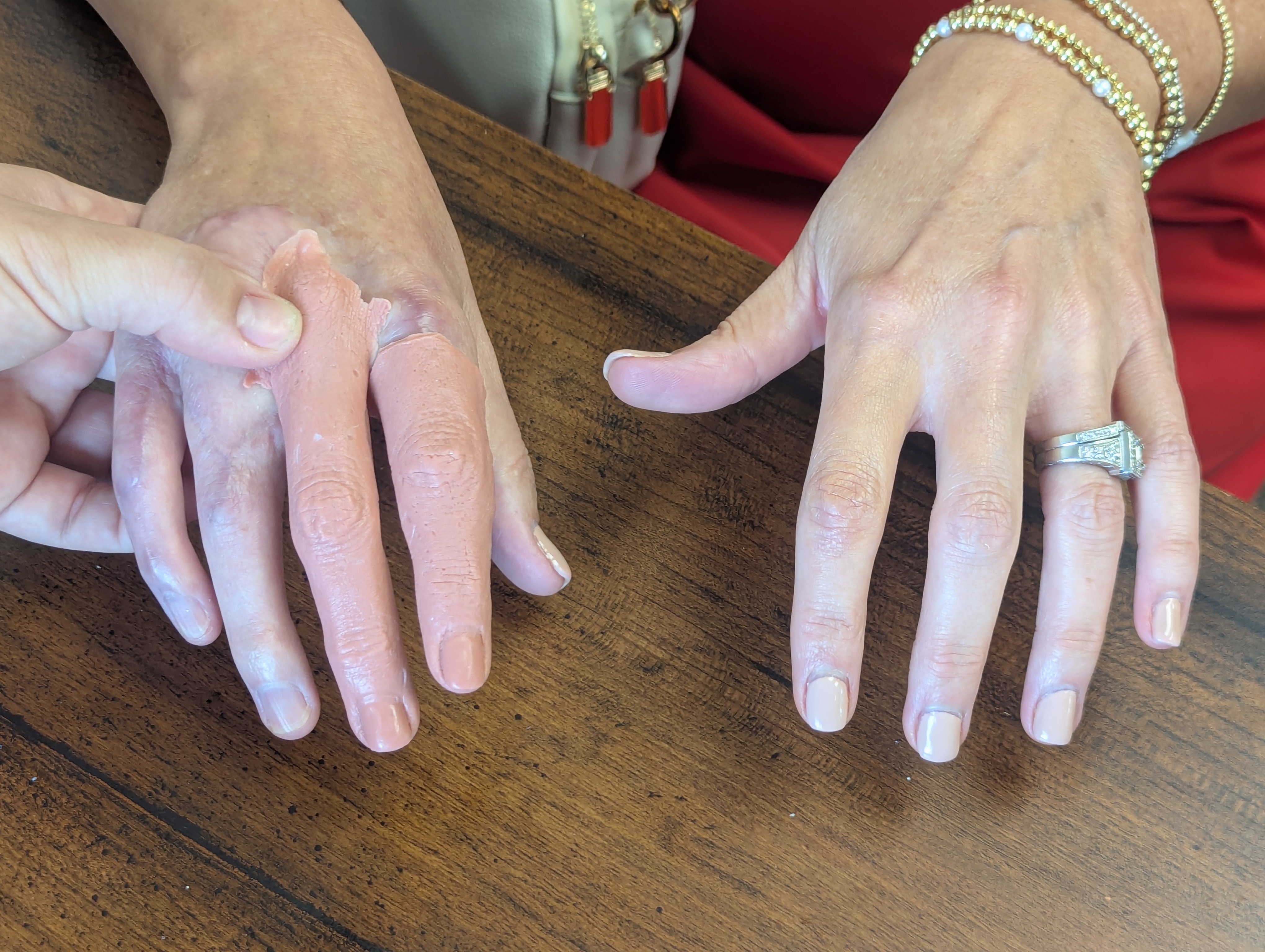
Working hand-in-hand to assure optimal gesture and function
In these fitting sessions the patient is involved immediately in the process. Seeing what is happening over the contours of her finger amputations can be an exciting but emotional moment too for the patient.
Unlike reconstructive surgery where the surgeon focuses alone and the patient waits for the outcome, anaplastologists execute much of the restoration with the patient and family watching.
From Artistic Lifelike Prosthetics to Purely Functional Restorations
Now we move from the ocularist – anaplastologist relationship to the anaplastologist – prosthetist work. Medical Art Prosthetics has been so fortunate to have the right professionals involved in the right places around the country, at the right time. Enter certified orthotist/prosthetist Scottie Hutchinson, CPO. For our below-elbow amputee we teamed with Scottie to offer the patient a myoelectric prosthesis. The full in-house laboratory of Medical Art Prosthetics in Madison, Wisconsin was were Scottie designed and fabricated the trial myoelectric device for fitting, myo-testing and the patient’s initial training.
Stay tuned for updates on the progress of the final fabrication of the suction socket and the delivery of the definitive prosthesis; the Ottobock Bebionic Hand with wrist rotator.
Related News Articles
Anaplastologists Unite at International Meeting
Magnet Retained Nasal Prosthesis Created in San Francisco