







Prosthetic Finger Is Even More Lifelike Now
Restoring a Missing Middle Finger — Without the Gap
We’re excited to share an update on one of our most unique prosthetic finger designs.
Glen, a Florida-based manager, recently took delivery of his new flexing prosthetic middle finger. Years ago, an accident left him with only about ¾ inch of residual length. While he adapted in many ways, the absence of the middle finger created a very visible gap whenever he extended his hand to wave or reached out to shake someone’s hand.
If you want to understand what that feels like, place your hand flat on your thigh and flex your middle finger completely into your palm. The space between the index and ring fingers becomes obvious. That visual difference is difficult to ignore especially in professional settings where handshakes and gestures are part of daily interaction.
Many individuals with hand amputations develop a guarded use of the affected hand. As Glen’s responsibilities increased, so did his awareness of that missing space.
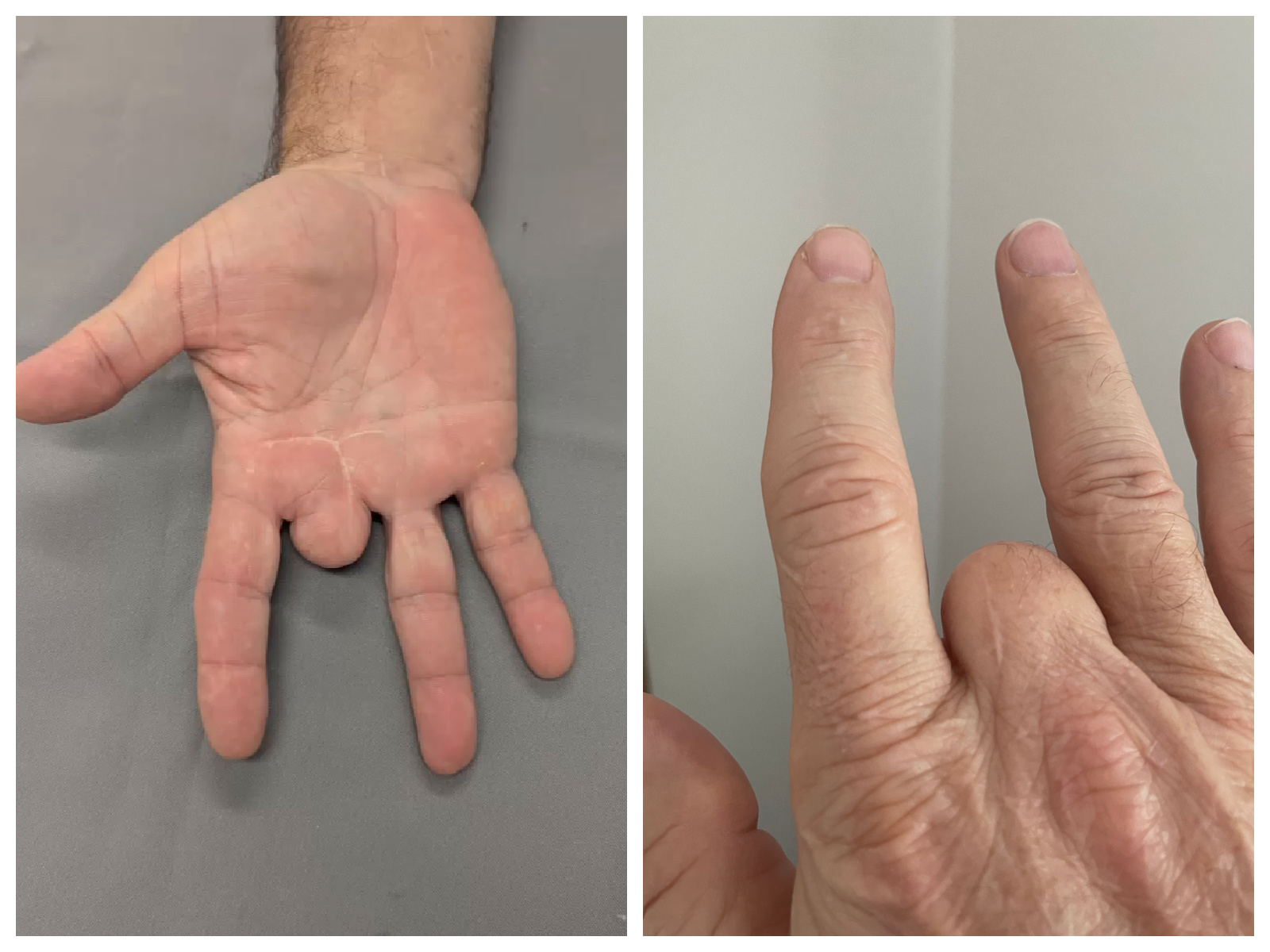
Short residual finger following amputation
Why Short Residual Fingers Are So Challenging
From a clinical standpoint, a very short residual finger presents a real attachment problem.
Conventional silicone prosthetic fingers typically rely on suction suspension. When the remaining digit is this short, there simply isn’t enough surface area to create dependable retention. Adhesives can help, but they tend to be messy and can degrade the prosthesis over time. Perspiration and natural hand movement gradually weaken adhesive bonds.
The last thing anyone wants is to worry about a prosthesis loosening; or worse yet, slipping off during a handshake or presentation. Glen joked about it, but the concern is understandable.
With most standard full-length silicone fingers, the result is what patients describe as a “dangling” effect. The prosthesis may restore some passive function for typing or stabilizing light objects, but it lacks secure integration with the hand. When the residual finger is extremely short, that instability becomes even more pronounced.
A Body-Driven, Anthropomorphic Solution
For Glen, we developed a more advanced design.
In addition to a suction fit, this prosthesis incorporates specialized medical-grade silicones and passive articular action at the joint. Most importantly, we engineered a body-driven mechanism that allows the prosthetic middle finger to flex and extend in coordination with the adjacent index and ring fingers.
The result is an anthropomorphic prosthetic finger that:
-
Attaches securely
-
Feels natural to the touch
-
Restores full anatomical appearance
-
Moves in harmony with the hand
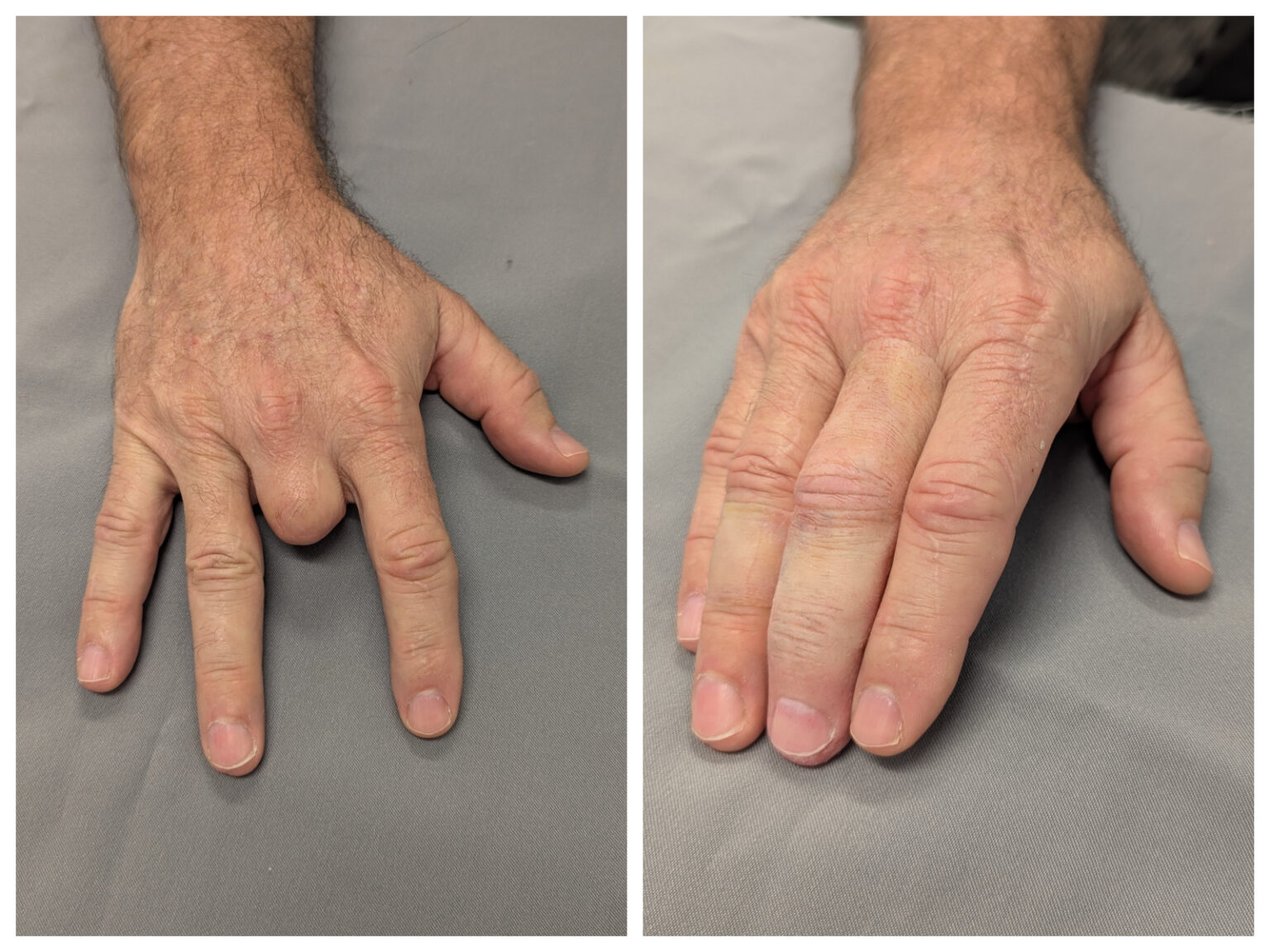
When we shook hands at delivery, his grip felt complete. The gap was gone. When he waved goodbye, the movement looked entirely natural.
This is where lifelike appearance meets functional integration.
Continuing Innovation in Prosthetic Design
At Medical Art Prosthetics, we continue refining this design platform. We are also exploring collaborative research opportunities with biomedical engineering students at the University of Wisconsin, introducing them to real-world prosthetic design challenges.
Our hope is simple: combine clinical experience with engineering insight to push anthropomorphic prosthetics even further.
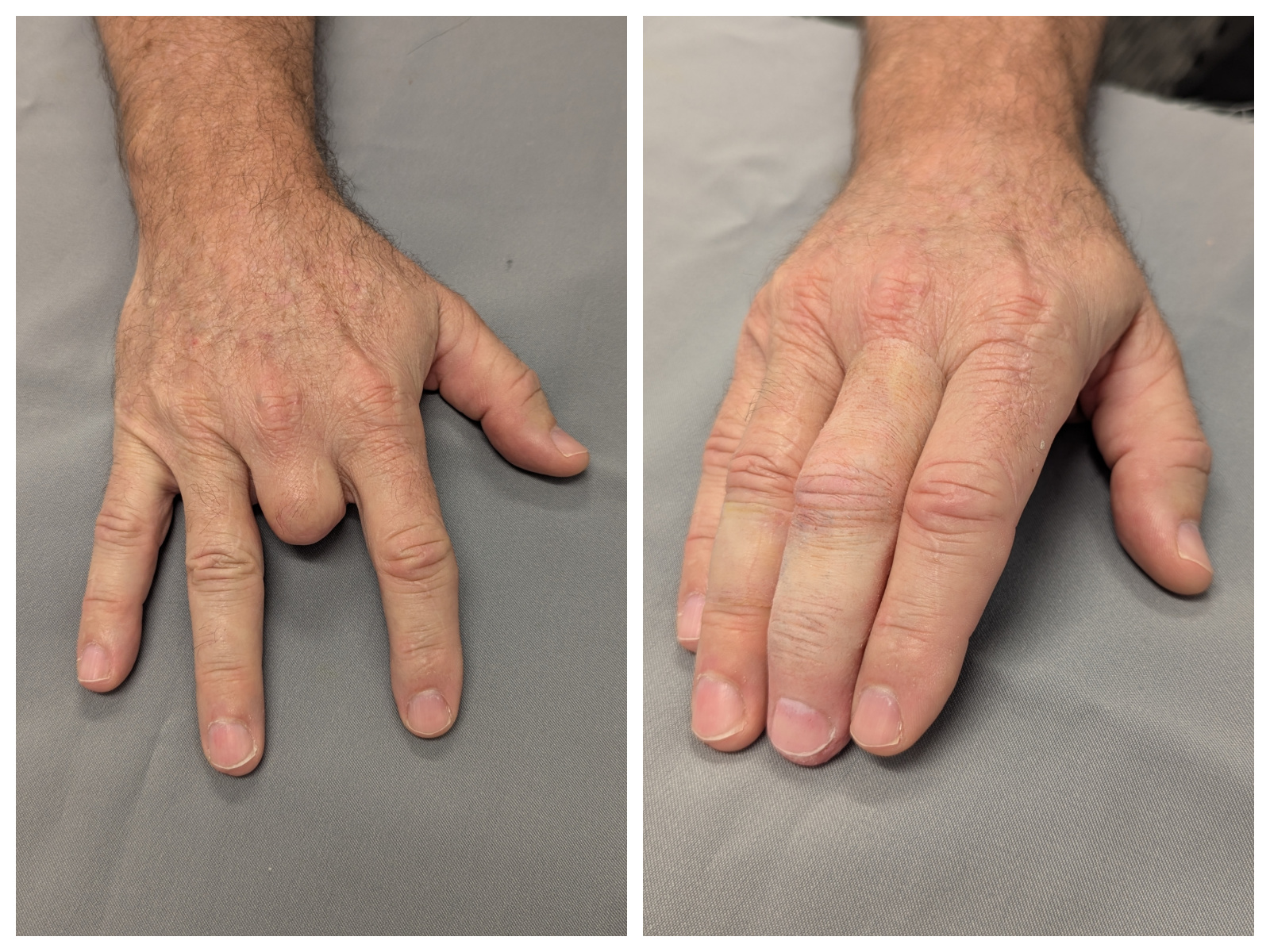
First Generation Anthropomorphic Finger
This anthropomorphic prosthetic finger will continue to be developed by Medical Art Prosthetics, LLC, and potentially further enhanced by the bright minds of biomedical engineering students at the University of Wisconsin. We continue to sponsor special research projects which help introduce BME students to real world prosthetics related design challenges while hoping that their engineering minds might reveal advanced processes we have not been exposed to in our anaplastology practices. See the UWBME Student Design Consortium team here.
No More Gap After Middle Finger Amputation
Glen now has the option to wear his prosthetic finger during business meetings, presentations, or any social engagement where he wants his hand to look and function naturally.
For him, it’s not just about appearance. It’s about confidence — extending a hand without hesitation.
If you’d like to learn more about custom prosthetic fingers or discuss a specific case, we’re always available to talk. See more prosthetic fingers here.