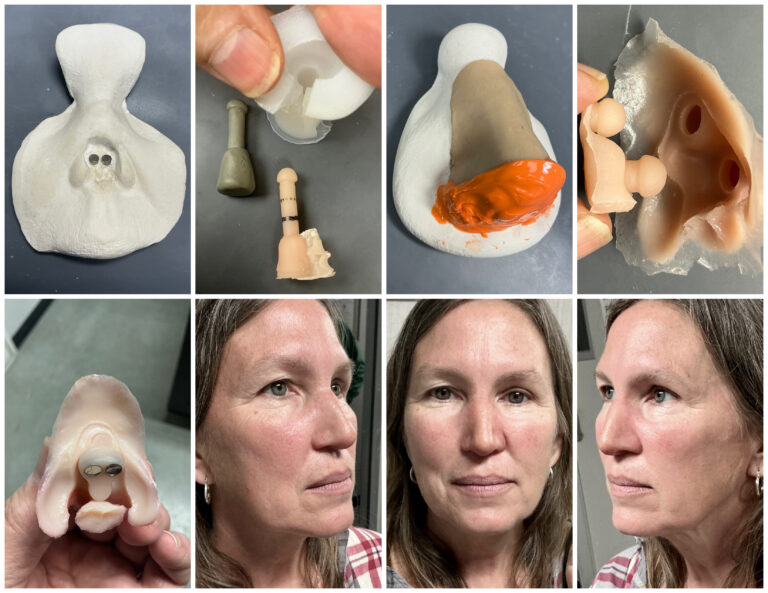









Easy-to-Wear Nasal Prosthesis
What makes his Nasal Prosthesis Easy-To-Wear?
Its is not hard to imagine that when someone has to wear a nasal prosthesis there must be a way to keep it on. We as anaplastologists have to work against the force of gravity. So, how does a prosthetic nose stay in place? Here are some traditional ways:
- prosthetic adhesive
- attachment to glasses
- attachment by strings that loop around the ears or head
- magnetic bone anchored implants
- anatomical engagement of undercuts inside the nasal cavity
It is the last method that has worked very well for our loyal patient from West Virginia. We originally created the silicone nasal prosthesis in Madison in 2019.

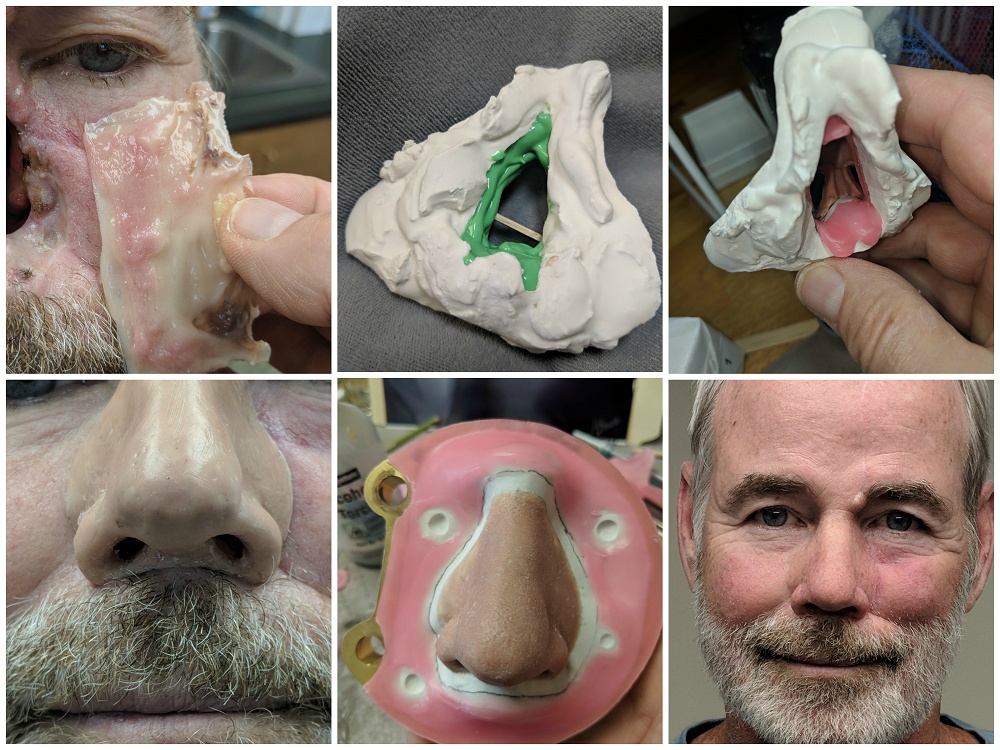
The design of this nose prosthesis started out not unlike other full nasal prostheses that are created for total rhinectomy patients. However, we captured some of the contours of the floor of the nasal cavity which corresponds to the hard palate. We use a soft gel material to capture this contour in the facial impression. This is the green material seen in the nasal prosthesis sequence of images. We do the same impression maneuver to capture the roof of the cavity – essentially the recess behind the intact nasal bone.
Retentive Element of the Nasal Prosthesis
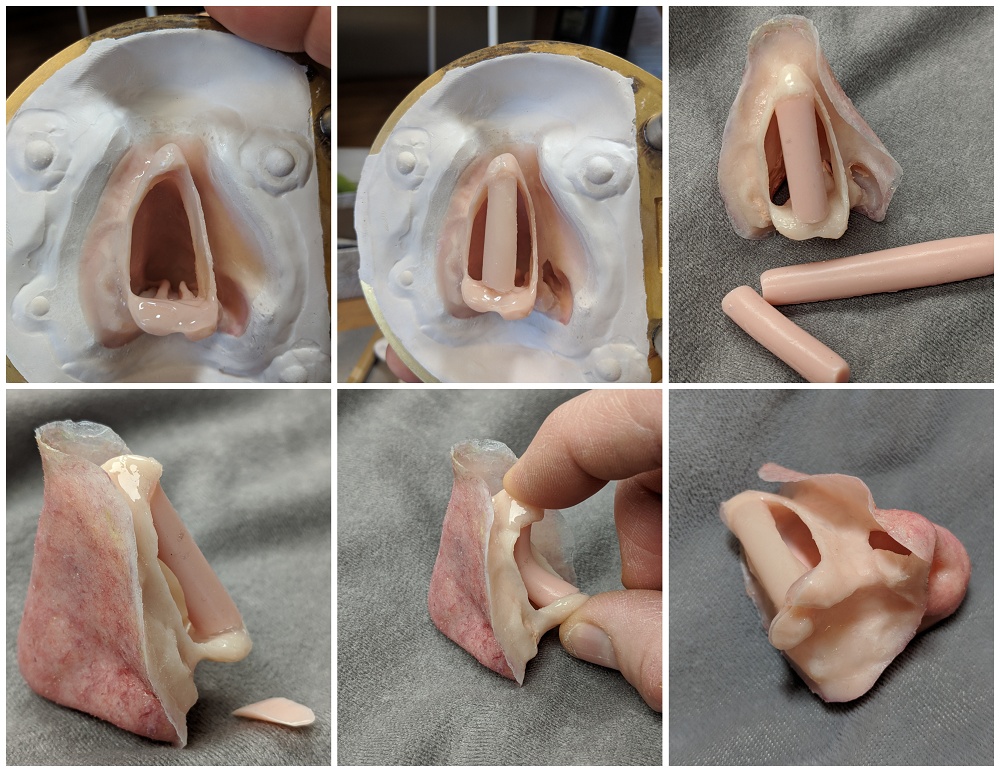
The nasal prosthesis that was produced from the mold included soft fingers of silicone that extend into the superior and inferior undercuts of the cavity aperture. The prosthesis slipped easily into position but the fingers of silicone were to flimsy and flexible and provided too little retentive action. Therefore, a separate cylinder of silicone was fabricated to connect the fingers of silicone to provide the needed retentiveness. The flexibility of the strut was tested as was the airflow as the patient was instructed to breathe in and out through his nose. Some steps are shown below.
Interested in seeing how the prosthesis is applied and removed?
We have a detailed demonstration video available on our YouTube channel. Please note that the video contains brief clinical views of the surgical defect and may be graphic for some viewers.
Here is the video from 2019:
Replacement and Retinting the Nasal Prosthesis
Over 7 years time the prosthesis only required retinting which was accomplished through the mail. Medical Art Prosthetics has developed highly accurate methods of interpreting the color shifts that occur with silicone pigments and base elastomers. So, rather than require the patient fly or drive from West Virginia to Wisconsin we work with him through the mail. At some point though he ordered a new fresh replacement nasal prosthesis which was easily processed from the original archived mold.
Changing Anatomy Requires new Nasal Impression
After 7 years working through the mail our loyal client elected to drive with his wife from West Virginia to our Madison, Wisconsin facility where anaplastologist Julia Schomberg, MSOP was ready to take a new impression and create a new mold. It was apparent that after 7 years, with thinning of facial tissue and other anatomical changes that the fit had relaxed
Redesign and Refitting is Part of Facial Prosthetics
These normal bodily changes result in loss of the retentiveness of the fit. This clinical manifestation is common in all facial prosthetics over much shorter periods of time. In many cases though patients, including nasal prosthetics patients do not realize the changes that have taken place because they occur so slowly. Also, many patients use adhesives which are effective at sealing gaps and holding the nasal prosthesis in place. However, with the adhesive-free nasal prosthesis the fit and retention must be perfect. So, Julia Schomberg scheduled the patient for his 4 day process.
2026 – A Nasal Prosthesis that is Part of Him
Interested in seeing how the new prosthesis is applied?
Please note that the video contains brief clinical views of the surgical defect and may be graphic for some viewers.
Below are a few organizations that help in supporting individuals with facial differences resulting from cancer, congenital conditions, other diseases, or trauma.
Before, you leave our educational website to the organizations, please review the depth and breadth of our experience with midfacial extraoral prosthetics in our main nasal prosthetics section and then scroll to see specific information on retention systems and our beautiful results.
Related News Articles
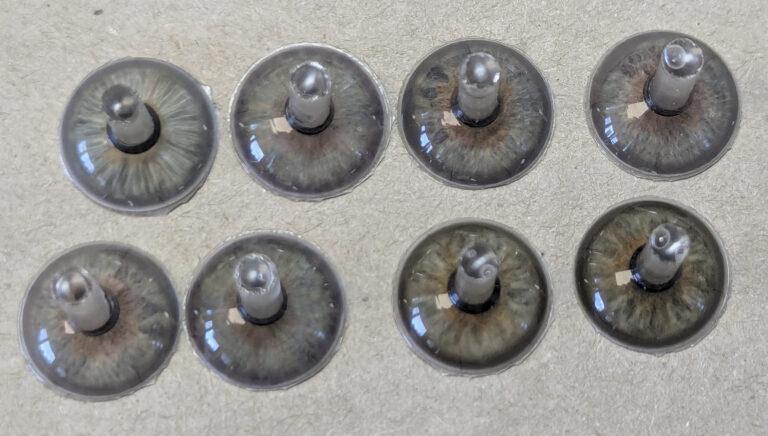
Prosthetic Eyes to Myoelectric Hands

Anaplastologists Unite at International Meeting